

Cloud computing vs. Grid Computing
Cloud computing require the need for a third party component to handle various computing needs and provide web services. In the context of cloud computing, the term cloud is used as a metaphor to refer to the internet. Cloud computing allows companies, both small and large, to save a lot of resources on infrastructure investment
nr18.jpg)
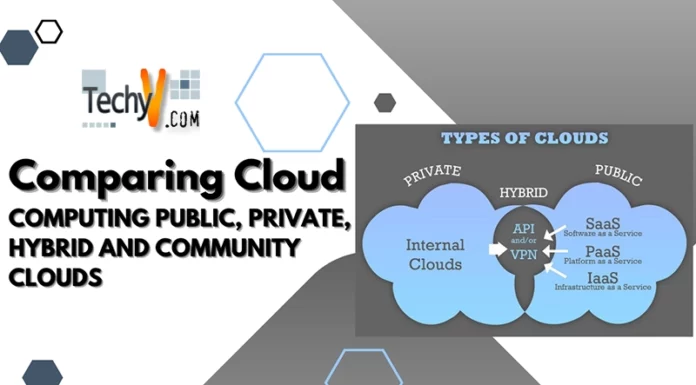
Medium and small enterprises are found to benefit more from the use of cloud computing. It integrates Web 2.0, software as a service (SaaS), platform as a service (PaaS) and infrastructure as a service (IaaS). It gets rid of all the intricacies and costs of purchasing, configuring and managing both software and hardware that are required to construct and install applications. These services are supplied through the Internet, or Cloud, via online platforms such as Amazon Web Services (AWS), Salesforce.com and Google Apps.
Grid computing, on the other hand, is a type of dispersed computing in which the resources available in a network of computers can be accessed and used simultaneously to come out with a solution. Basically, it allows simple and collaborative accession to resources seem like an extension of collective computing. Today, grid computing has proven its functionality in scientific experimentation. It helps in facilitating scientists in evaluating and stocking up enormous chunks of data by communal usage of resources around the globe. The grids of grid computing are loosely attached and spread out physically with regards to computing arrangements. Some examples of grid computing platforms are SETI (Search for Extraterrestrial Intelligence), BOINC (Berkeley Open Infrastructure for Network Computing) and GIMPS (Great Internet Messene Prime Search).
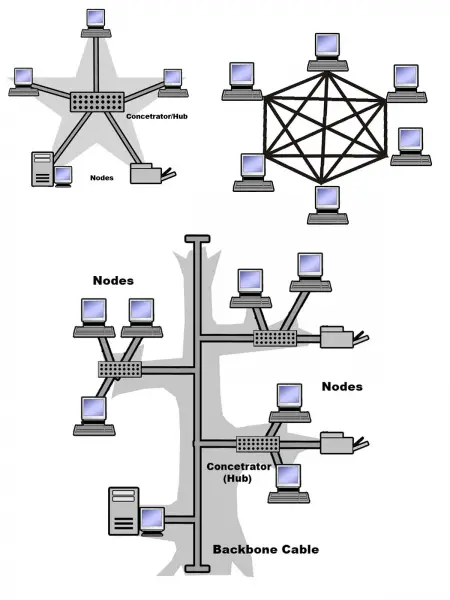
The functioning of cloud computing involves the use of both thick and thin networks where the application determines whether the user or the server will handle the higher volume of the workload. Grid computing, on the other hand, links a computer on one shore to another computer on the other shore, forming a common pool of resources that every computer can access. Being charged in accordance with the usage on mutual servers is called utility computing.
The computing resources available for use during grid computing can be switched off or on as and when desired. Cloud computing differentiates itself from grid computing by providing resources on demand, therefore ensuring that there will not be an excess of resources and hence no unnecessary costs incurred. What gives cloud computing an even greater edge against grid computing is that it also saves time and energy in providing data which might be irrelevant to the client. With grid computing, users need software that can split the program from single huge system image into several manageable parts. The drawback here is that the software would fail if a single part of program on the node fails.
This risk of software failing is lessened if it is not dependent on another to be able to complete the grid task. This is the major reason why companies have huge operating expenses. Cloud computing does not require a computer or a certain application, or acquire a specific version configured into PDAs or smart phones to be able to function. The companies hold no right over the platform, software, and infrastructure in this case. They also do not need to be bothered with sets of connections and servers.
Cloud computing and Grid Computing have different approaches on many subjects. One of which is the threshold policy, which lets the user manually detect the problems he might face once the program starts functioning. To be able to test, develop, improve and apply a program effectively and efficiently, a customer should know what the threshold policy is and learn how it perceives and handles the abrupt increase or decrease in demand. Also, the user should ascertain how idle resources are used and allocated for other tasks.
Another point of difference between cloud computing and grid computing are interoperability issues. These issues develop due to the different formats followed when exporting and importing information. Companies discover the existence of such issues when changing vendors who own different APIs. This poses difficulty in attaining an applications’ interoperability among vendors of cloud computing. This issue is solved by reformatting information or modifying the logical expressions of applications.
Hidden costs is not mentioned in cloud computing. This could become an issue since Service providers can charge companies a lot for storing terabytes of database within clouds. What companies can save from this expenditure can be used to buy license for latest software, prepare and train new personnel, and invest on new infrastructure. Latency causes increased expenditures in companies especially when taking into consideration their distance from cloud suppliers in the case of heavy traffic.
Unexpected behavior is something companies should expect. Just because the credit card corroboration application works fine on the company’s domestic information center, it does not mean that it will also function smoothly on the outside. In this case, checking the behavior of the application within the cloud becomes necessary. This involves the proper allocation and distribution of developed and unexploited resources for tasks where their worth could be maximized. If the applications show unexpected outcomes, then these issues need to be fixed and settled before applying them within the cloud.
Cloud computing is regarded to be more environment-friendly than grid computing. This is because it involves less hardware elements running applications on the enterprise’s domestic information centers. Once the hardware components decrease the energy for their management, cooling is reduced automatically. These systems are run more efficiently even in the remote areas by consolidating them into groups.
Cloud computing also promotes telecommuting practices which further reduce the requirement of work space such as file transfers and remote printing, purchasing new furniture, discarding the old office items, and of course, the usual office tasks. Such practices allow employees to communicate and carry out tasks without driving to office everyday, which has a more profound effect on the environment in the form of reduced carbon dioxide production.
For better high-end users of software, its best to employ cloud server bands in the domestic information center and temporarily expand resources to one of the vendors. This lets project heads to manage costs in better ways, deal with security and proper distribution of resources in accordance to the projects assigned to the clouds. Project heads can also allocate single hardware capital to the diverse types of clouds such as production cloud, testing cloud and web development cloud.